
Chennai, May 2026: There’s something deeply comforting about the idea of coming home after a hospital stay. Your own bed. Familiar faces. Food that actually tastes like food. For generations, Indian families have believed — and not without reason — that home is where healing happens best.
But here’s a question that more families are beginning to ask, often after a difficult experience: is home always enough?
Surgery Has Changed. Recovery Hasn’t Kept Up.
Modern medicine has come a long way. Procedures that once meant weeks in a hospital — knee replacements, hip surgeries, cardiac interventions, spinal surgeries — now see patients discharged in days. That’s genuinely good news.
But there’s a catch. Shorter hospital stays don’t mean less recovery. They mean more of that recovery happens outside the hospital, often without the clinical support patients still need. And with India’s senior population expected to nearly double to 350 million by 2050, the number of families navigating this challenge is growing every year.
Recovery today isn’t passive. It’s not just rest and time. It involves structured rehabilitation, careful monitoring, and the kind of consistent clinical attention that can make the difference between a smooth recovery and a serious setback.
What “Recovering at Home” Actually Looks Like
Ask anyone who has cared for a parent or spouse after a major surgery, and they’ll tell you — it’s harder than it looks.
There’s the physiotherapy that needs to happen every single day, not just when it’s convenient. The wound that needs to be checked and dressed properly. The medications that need to be taken at the right time, in the right doses. The constant vigilance for early warning signs that most families simply aren’t trained to spot.
And then there’s the emotional weight of it — trying to be a caregiver while also being a son, a daughter, a spouse, while managing work and everything else life doesn’t pause for.
For patients recovering from orthopaedic surgeries, stroke, paralysis, or cardiac events, even small and unintentional gaps in care can slow recovery significantly or lead to complications that land them right back in hospital.
The Hard Truth About Most Indian Homes
Homes are built for living, not for recovering from complex medical procedures. That’s not a criticism — it’s just reality.
Most homes don’t have trained nursing staff available around the clock. They don’t have the equipment to monitor oxygen levels, blood pressure, or other vitals through the night. They aren’t designed to prevent falls or support someone relearning to walk. And when something goes wrong at 2am, the nearest emergency support is often not as close as it needs to be.
Families do their absolute best. But good intentions and genuine love don’t replace clinical expertise — and they shouldn’t have to.
When It Goes Wrong
The numbers are sobering. Globally, somewhere between 15 and 20 percent of patients are readmitted to hospital within 30 days of discharge. Inadequate post-discharge care is one of the leading reasons. In India, where structured recovery support is still far from the norm, that risk is even higher.
The painful part is that many of these readmissions are avoidable. The surgery went well. The hospital stay was fine. It was what happened — or didn’t happen — in the weeks after that made the difference.
So When Does Home Work, and When Doesn’t It?
To be clear — home recovery absolutely works for the right patients. Minor procedures, minimal clinical needs, a family that’s well-supported and well-informed. In those situations, being home can genuinely aid recovery.
But for patients dealing with:
• Major orthopaedic surgeries like knee, hip, or ACL repairs.
• Neurological conditions that need specialised Neuro Rehabilitation, Paralysis Treatment, or Stroke Rehab.
• Cardiac events or discharge from the ICU.
• Multiple conditions, limited mobility, or simply no one at home who can provide consistent care.
The honest answer is that home — however loving — may not be the safest or most effective place to recover.
A Different Kind of Care Is Emerging
In response to this gap, a new kind of facility has been quietly growing across India’s cities — transition care homes, designed specifically for the space between hospital and home.
These aren’t hospitals. They’re not nursing homes either. They sit in between — offering the clinical rigour of a medical environment with the comfort and dignity of somewhere you’d actually want to spend time recovering.
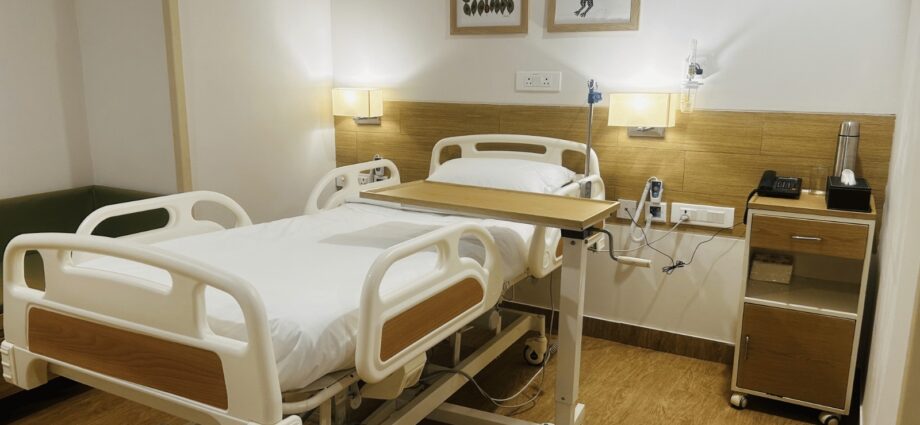
What that looks like in practice: nurses available through the night, physiotherapists who show up every day, doctors on call, specialised programmes for Neuro Rehabilitation, Paralysis Treatment, and Stroke Rehab, and infrastructure thoughtfully built around the needs of people who are healing — proper rails, safe flooring, emergency response systems, the details that matter when someone is vulnerable.
Families Are Starting to See It Differently
Something is shifting in how urban Indian families think about recovery. The assumption that home is always the right answer is giving way to a more honest conversation — one that asks not just “where is my family member most comfortable?” but “where are they most likely to recover well?”
Providers like Antara Care Homes are part of this shift. With 8 Care Homes and over 485 beds across Delhi-NCR, Bengaluru, and Chennai, NABH-accredited facilities, and care programmes covering everything from orthopaedic recovery and cardiac rehabilitation to Neuro Rehabilitation, Paralysis Treatment, and Stroke Rehab, they represent what structured, clinically governed recovery can look like when it’s done with both expertise and genuine care for the patient.
The Question Worth Asking
The next time someone you love comes home from hospital, it’s worth pausing before assuming the hardest part is over.
Recovery doesn’t end at discharge. In many ways, it’s just beginning.
The question isn’t whether home is familiar. The question is whether it’s equipped. And if the honest answer is no, there’s no shame in that — only in not asking.
Because the best place to heal isn’t always the most familiar one. It’s the one that gives recovery the best possible chance.
